Installing EV charge points is only the beginning.
For a fleet, workplace or commercial site, the real test comes once vehicles start arriving, drivers develop charging habits and the infrastructure has to perform day after day. At that point, one of the most useful tools available to technical and operational teams is data.
A connected charging network can tell you far more than how many kilowatt-hours have been delivered. Used properly, it can show whether chargers are available when needed, where demand is building, whether power is being used efficiently and where faults or operational issues are starting to appear.
Good EV infrastructure should not simply work on the day it is commissioned. It should continue to support the operation as requirements change.
What should you actually monitor?
The right metrics depend on the application, but most organisations should start with a relatively simple set of questions.
How often are charge points being used? At what times? How long are vehicles connected? How much energy is delivered per session? Are some chargers heavily used while others sit idle? Are charging sessions completing successfully? How much downtime is being recorded, and are the same faults recurring?
For a fleet operator, the questions become even more operational.
Are vehicles receiving enough energy before their next duty cycle? Are drivers plugging in when expected? Is the available electrical capacity being shared effectively across the site? Could the existing infrastructure support more vehicles before additional chargers or grid capacity are required?
Individually, these are data points. Together, they describe how well the charging operation is actually working.

Turning faults into useful information
Fault data is particularly important.
A charger that occasionally drops offline may look like a minor technical issue. But if the same fault appears repeatedly, affects a particular unit or occurs at a certain time of day, the data can begin to point towards a wider problem.
Remote monitoring can help technical teams identify issues earlier, investigate them without always travelling to site and build a clearer picture of network reliability over time.
Reliability is increasingly being treated as a measurable part of EV infrastructure performance. For public rapid charging networks in the UK, operators are required to achieve an average 99% reliability across their rapid network over the calendar year. That specific requirement does not apply to every workplace or private fleet installation, but it demonstrates the growing importance of understanding and measuring charger availability.
Using data to make better infrastructure decisions
One of the biggest advantages of monitoring charging infrastructure over time is that future investment can be based on evidence rather than assumptions.
A site may believe it needs more chargers because utilisation is increasing. The data might show something different. Perhaps there is only a short peak in demand, vehicles are remaining connected long after charging has finished or the available electrical capacity could be distributed more effectively.
In those circumstances, changing operating procedures, introducing managed charging or adjusting load allocation may create additional capacity without immediately installing more hardware.
The opposite can also be true. Consistently high utilisation, increasing energy demand and regular competition for available charge points can provide a clear evidence base for expansion.
That information can also be useful beyond the engineering team. Fleet managers can understand vehicle behaviour, operations teams can plan around charging demand and facilities teams can see how available electrical capacity is being used.

Where Hydra Nexus fits
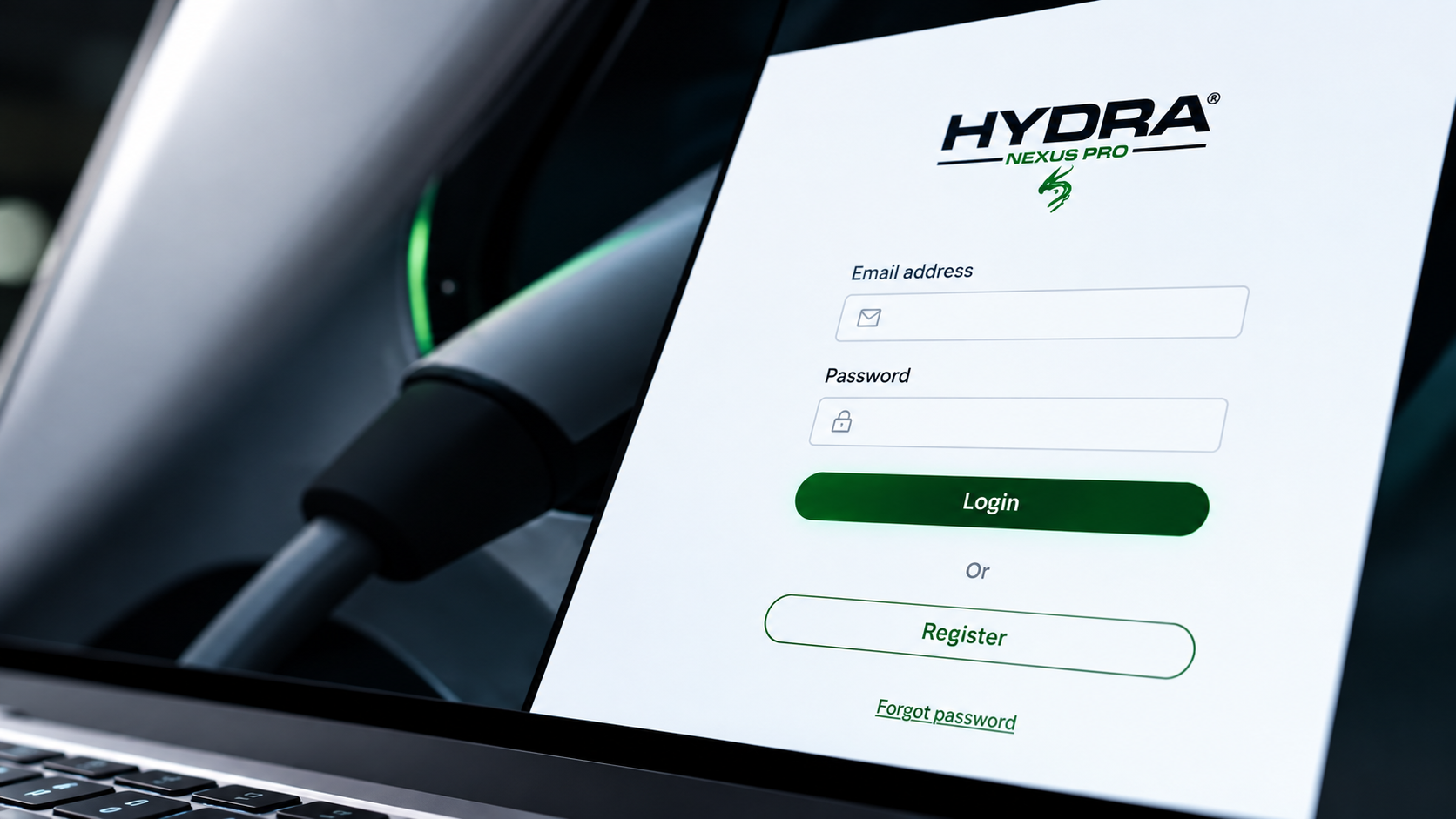
Hydra Nexus provides a way of bringing this information together.
The cloud-based platform gives organisations visibility of their charging network alongside the tools required to monitor performance over time. That includes real-time charger information, historical and analytical data, remote diagnostics, scheduled reporting and automatic fault and maintenance notifications.
For organisations operating multiple chargers or sites, having that information in one place can be particularly valuable. Instead of treating every charge point as an isolated piece of hardware, the infrastructure can be monitored as a connected network.
Hydra Nexus also supports dynamic load management, helping organisations make better use of the electrical capacity already available on site. Rather than allowing every connected vehicle to draw maximum power at the same time, charging demand can be managed across the local network so that available capacity is distributed more intelligently.
That can be particularly important for fleet depots, workplaces and multi-charger sites where several vehicles may be connected simultaneously. In many cases, the challenge is not simply how many chargers are installed, but how effectively the site’s available power is allocated between them. Managing that demand can help reduce unnecessary peaks, support a larger number of connected vehicles and potentially delay the need for additional electrical infrastructure.
RFID functionality adds another layer of visibility. Charging activity can be associated with individual drivers, vehicles or selected user groups, creating a clearer picture of how the network is being used.
For fleet operators, this can help answer practical questions such as who is charging, when charging sessions are taking place, how long vehicles are connected and how much energy is being consumed. Over time, those insights can highlight patterns in driver behaviour, identify unusual usage and help operations teams understand whether charging activity is aligned with vehicle schedules and duty cycles.
It also makes reporting more meaningful. Instead of looking only at total site consumption, organisations can begin to understand energy use at a more granular level and compare charging behaviour across different vehicles, users, locations or periods of time.
Nexus is also OCPP 1.6 compliant, which means compatible charge points from different manufacturers can be incorporated into the same management environment. For organisations with a mixed charging estate, or those that expect their infrastructure to evolve over time, that interoperability can be important.
It reduces the need to view every charger as a standalone asset tied to a separate platform. Instead, compatible hardware can be monitored and managed within a more consistent operational framework, giving technical and fleet teams a clearer view of the charging estate as a whole.
Ultimately, the value comes from bringing charging activity, user data, power management and charger performance into one place. That makes it easier to move beyond simply knowing whether a charger is online and towards understanding how effectively the infrastructure is supporting the operation.
From monitoring to optimisation
EV charging networks are rarely static.
Fleet sizes change. Vehicle dwell times change. Sites expand. Energy requirements increase. And drivers do not always behave in exactly the way anticipated when the original infrastructure was designed.
That is why monitoring should form part of the ongoing operation of EV infrastructure.
The principle is straightforward: monitor what is happening, identify patterns, make an operational or technical change and then use the data to understand whether that change worked.
Over time, that creates a feedback loop in which charging infrastructure can be continually refined around the vehicles, people and operation it is there to support.
Because as EV operations become larger and more business-critical, knowing that chargers have been installed is no longer enough.
You need to know how they are performing.

Make the data work harder
As EV infrastructure becomes more critical to day-to-day operations, visibility matters. The more clearly you can understand charger performance, utilisation, energy demand and user behaviour, the easier it becomes to make informed decisions about what happens next.
That might mean resolving issues earlier, improving the way available power is managed, changing charging behaviour or planning future expansion with greater confidence.
Hydra Nexus is designed to give operators that clearer view, bringing network performance, charging activity and management tools together in one place.
If you want to better understand how your charging infrastructure is performing, or how data could help you improve the way it is managed, talk to the Hydra team about Hydra Nexus and your wider EV charging strategy.
Phone: 01268 205 121
Email: sales@hydraev.co.uk


