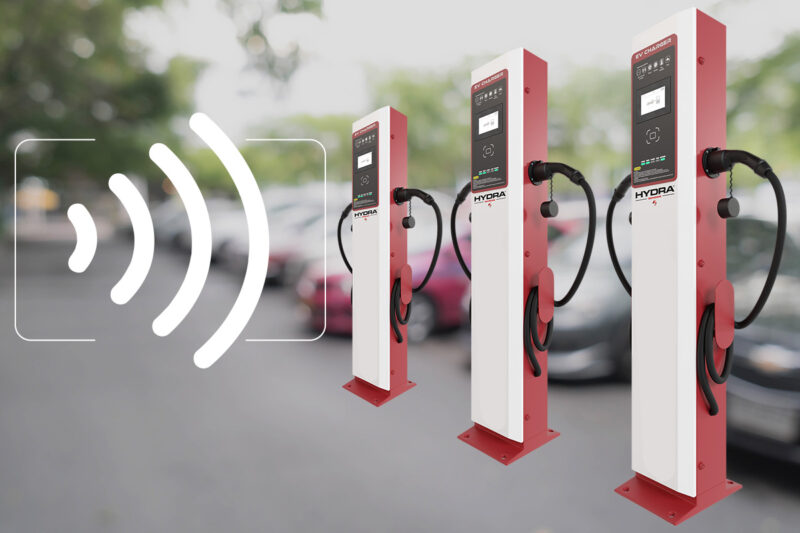
For many businesses, the first conversation about EV infrastructure quickly becomes a conversation about hardware.
How many charge points do we need? Should they be 7kW, 22kW or DC? Which model should we install? How quickly can the vehicles charge?
They are important questions. They are simply much easier to answer once the business has established what the charging infrastructure actually needs to achieve.
A fleet operator that needs 30 vans ready to leave a depot at 6am has a very different requirement from a dealership preparing vehicles between test drives. A workplace providing charging as an employee benefit has different priorities again. For a destination or public-access site, utilisation, payment and revenue may be central to the business case.
Each may use EV chargers. The strategy behind them can be completely different.
That is why a successful EV infrastructure project should begin with operational and commercial outcomes.

Start by defining what success looks like
Before specifying equipment, establish the job the infrastructure needs to perform.
For a fleet, success might mean every vehicle reaching its required state of charge before the next shift begins.
For a dealership, it could mean reducing the time vehicles spend waiting for charge while avoiding disruption to workshop and forecourt operations.
For a workplace, the priority may be providing reliable employee charging while staying within the site’s available electrical capacity.
For a destination, landlord or car park operator, charging might also be expected to generate revenue or add value to the site.
These requirements immediately begin shaping the infrastructure specification.
They determine how many vehicles are likely to charge simultaneously, how long they remain parked, what charging speeds are genuinely required, how much electrical capacity needs to be allocated and what management functionality is useful.
Without that groundwork, businesses risk designing the installation around the capabilities of the charger rather than the needs of the operation.
Understand how the vehicles actually work
One of the most useful pieces of information in an EV infrastructure project is often something very simple: how long are the vehicles parked?
A vehicle returning to a depot at 6pm and leaving at 7am has a substantial charging window. It may therefore require considerably less charging power than a vehicle that needs to return to service within an hour.
Mileage matters too.
A fleet vehicle travelling 60 miles each day does not necessarily need its entire battery replenished every night. The infrastructure only needs to replace the energy consumed while ensuring sufficient operating range for the next duty cycle.
Vehicle capability also needs to be considered. Energy Saving Trust guidance points out that an EV’s onboard charger can limit the rate at which it accepts AC power. Installing a higher-powered AC charger therefore does not automatically produce a corresponding increase in charging speed.
This is where analysing real operational data can prevent unnecessary expenditure.
More power is not automatically more useful
Charging speed tends to attract attention because it is easy to compare.
Yet the most powerful charger available is rarely a useful starting point for infrastructure design.
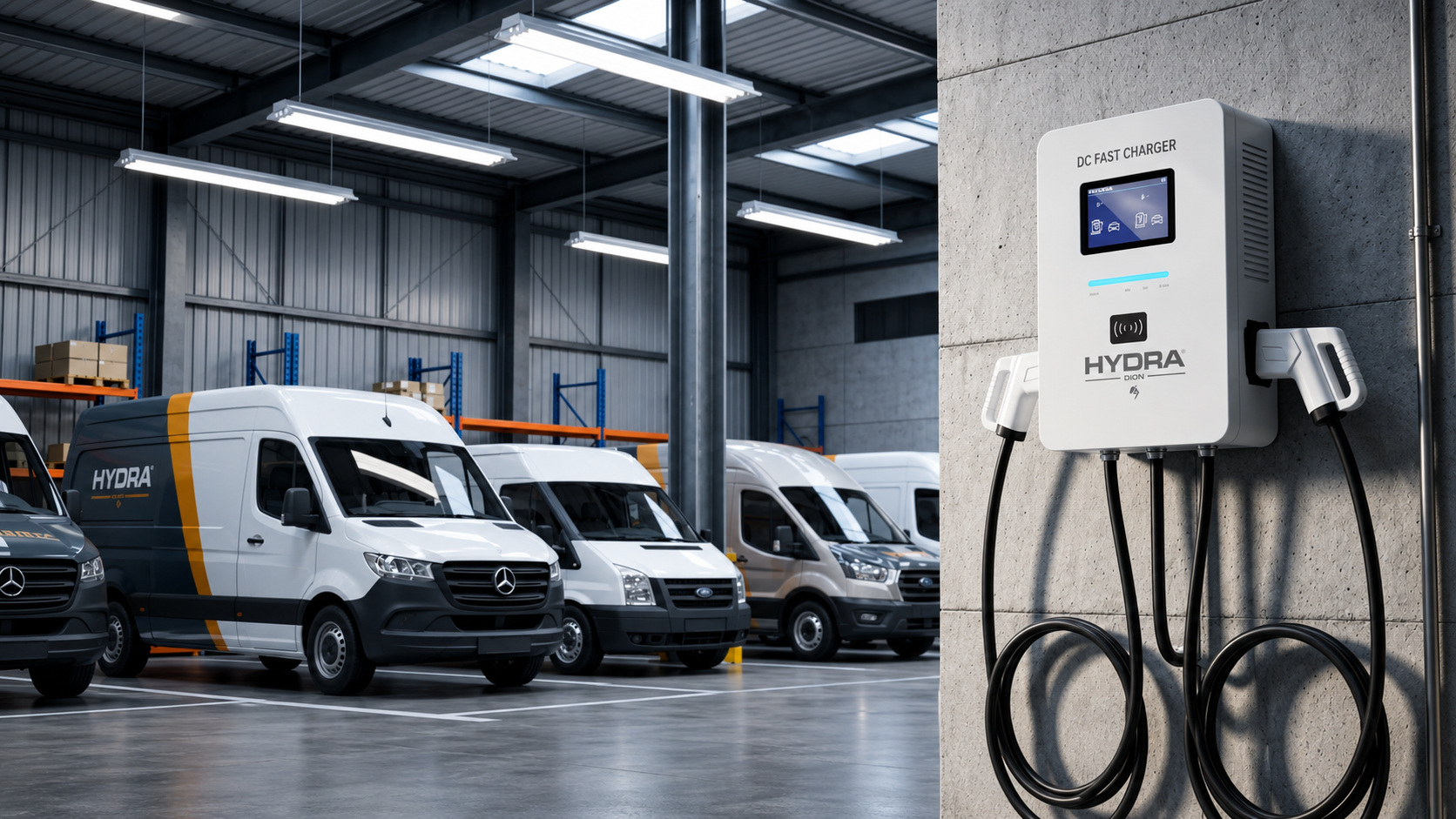
Higher charging power can affect equipment cost, electrical infrastructure, installation requirements and potentially the site’s grid connection. If vehicles have sufficient dwell time to charge at a lower rate, additional power may deliver little operational benefit.
Hydra encountered exactly this type of question when developing a charging solution for D Salmon Cars in Colchester.
A site assessment established both the charging capabilities of the dealership’s vehicles and the available electrical supply. Rather than simply installing the highest-rated solution possible, the chargers were configured around an 11kW requirement. The resulting design increased the number of available charging sockets by 50% while doubling combined charging output compared with the previous arrangement.
The important part of that project was not the number printed on the charger.
It was the operational result: greater charging availability, improved flexibility and better use of the site’s existing infrastructure.

Treat electrical capacity as part of the strategy
The electrical supply is one of the biggest influences on the cost and complexity of commercial EV infrastructure.
Adding every charger’s maximum rating together and assuming the site must provide that amount of power can produce a very expensive answer.
In practice, vehicles do not necessarily need maximum power simultaneously.
Load management allows available electrical capacity to be distributed between chargers according to demand. Dynamic systems can respond to changing electricity consumption elsewhere on the site, allocating additional capacity to EV charging when it becomes available.
Energy Saving Trust notes that this approach can allow organisations to accommodate additional EVs or higher charging rates without exceeding the site’s electrical limits, potentially reducing the need for costly supply upgrades.
For businesses, that turns power management into a commercial consideration rather than purely an electrical one.
The question becomes:
How can we achieve the required operational outcome using the available capacity as efficiently as possible?
Look beyond the installation cost
A sensible business case needs to consider the lifetime economics of the charging operation.
That includes the obvious capital costs:
- Charge points
- Installation and groundworks
- Electrical upgrades
- Networking and communications
- Software and management systems.
It should also consider operating costs, electricity tariffs, maintenance, support, downtime and the potential cost of relying on public charging where vehicles could otherwise charge at a depot.
Energy Saving Trust’s fleet guidance recommends looking at electrification through total cost of ownership, noting that depot charging and lower-cost electricity tariffs can materially improve the economics of running battery-electric vehicles compared with frequent reliance on rapid public charging.
There is also another cost worth considering: infrastructure that has to be redesigned prematurely.
Installing too much capacity today can waste capital. Designing an installation with no route for expansion can create another expensive problem later.
The strongest strategy usually sits somewhere between those extremes.

Decide what the technology needs to manage
Once the operational model is understood, software requirements become clearer too.
A relatively simple private workplace installation may need little more than secure user access and basic monitoring.
A larger fleet could require:
- Charger status and remote monitoring
- Energy reporting
- Driver or vehicle identification
- Charging prioritisation
- Dynamic load management
- Fault alerts
- Access control
- Cost allocation.
A public or semi-public installation may introduce additional requirements around payments, tariffs and revenue reporting.
Hydra’s NEXUS platform, for example, provides remote management and monitoring across connected charging infrastructure. Hydra also offers commercial systems incorporating features such as RFID access, load management, 4G connectivity and payment functionality where the application requires them.
These features have value when they solve a defined operational problem.
That problem should come first.
Plan for where the business is going
EV infrastructure normally lasts longer than an individual vehicle replacement cycle.
That makes future requirements important.
The UK’s Zero Emission Vehicle mandate continues to increase the proportion of new vehicles manufacturers must register as zero emission. For 2026, the targets are 33% of new cars and 24% of new vans, rising to 80% and 70% respectively by 2030.
Businesses therefore need to consider how their own EV requirement might develop.
A ten-vehicle fleet may become 20. Employee demand may increase. A depot may introduce larger commercial vehicles. Public charging may become commercially attractive at a site originally designed for private use.
Futureproofing does not necessarily mean installing every charger that might ever be required.
It can mean preparing electrical distribution, ducting, cabling routes, foundations, communications and load-management architecture so additional capacity can be introduced without starting again.
That is a much more useful form of scalability.

The questions to answer first
Before choosing charging equipment, a business should be able to answer some fundamental questions:
Operationally: Which vehicles need charging, how much energy do they use, when do they return and when must they be ready again?
Commercially: What is the budget, what operating savings are expected and how should infrastructure costs be evaluated over the life of the project?
Electrically: What capacity is currently available and how does the site’s wider electricity demand change through the day?
Practically: Where are vehicles parked, what groundworks or cable routes will be required and how can disruption be minimised?
Strategically: How is the fleet or site likely to change over the next three, five or ten years?
Operationally after installation: Who needs access, monitoring, reporting, payments or remote support, and what level of uptime is required?
Once those answers exist, selecting the technology becomes considerably more straightforward.

Start Your EV Transition with Hydra
There is no universal specification for commercial EV charging.
Two businesses with the same number of vehicles can need very different infrastructure because their operating models, sites, power availability and commercial objectives are different.
That is why Hydra approaches commercial EV charging from the wider infrastructure requirement: understanding the site, available power and intended use before developing the charging solution. Site surveys, load management, charging hardware, management platforms, project support and an approved installer network can then form part of the solution where required.
The charger is an important part of an EV strategy.
The better starting point is knowing exactly what you need it to achieve.
Planning EV infrastructure for your business, fleet or site? Talk to Hydra about your operational requirements and we can help you develop a charging solution built around them.
Phone: 01268 205 121
Email: sales@hydraev.co.uk