
Case Study: D Salmon Cars
The Challenge
D Salmon Cars had an existing dual AC charger that was:
- Outdated and no longer aligned with operational needs
- Offering insufficient charging capacity
- Incurring costly ongoing operating and support costs
Additionally:
- Site power supply limitations restricted upgrade options
- Limited parking space required a wall-mounted solution
- Metal cladding walls created challenges for conventional commercial charger installations
The dealership required a more flexible, higher-capacity charging solution — without exceeding site power constraints or budget.
Project Scope
- Deliver enhanced charging capacity within existing power supply limitations
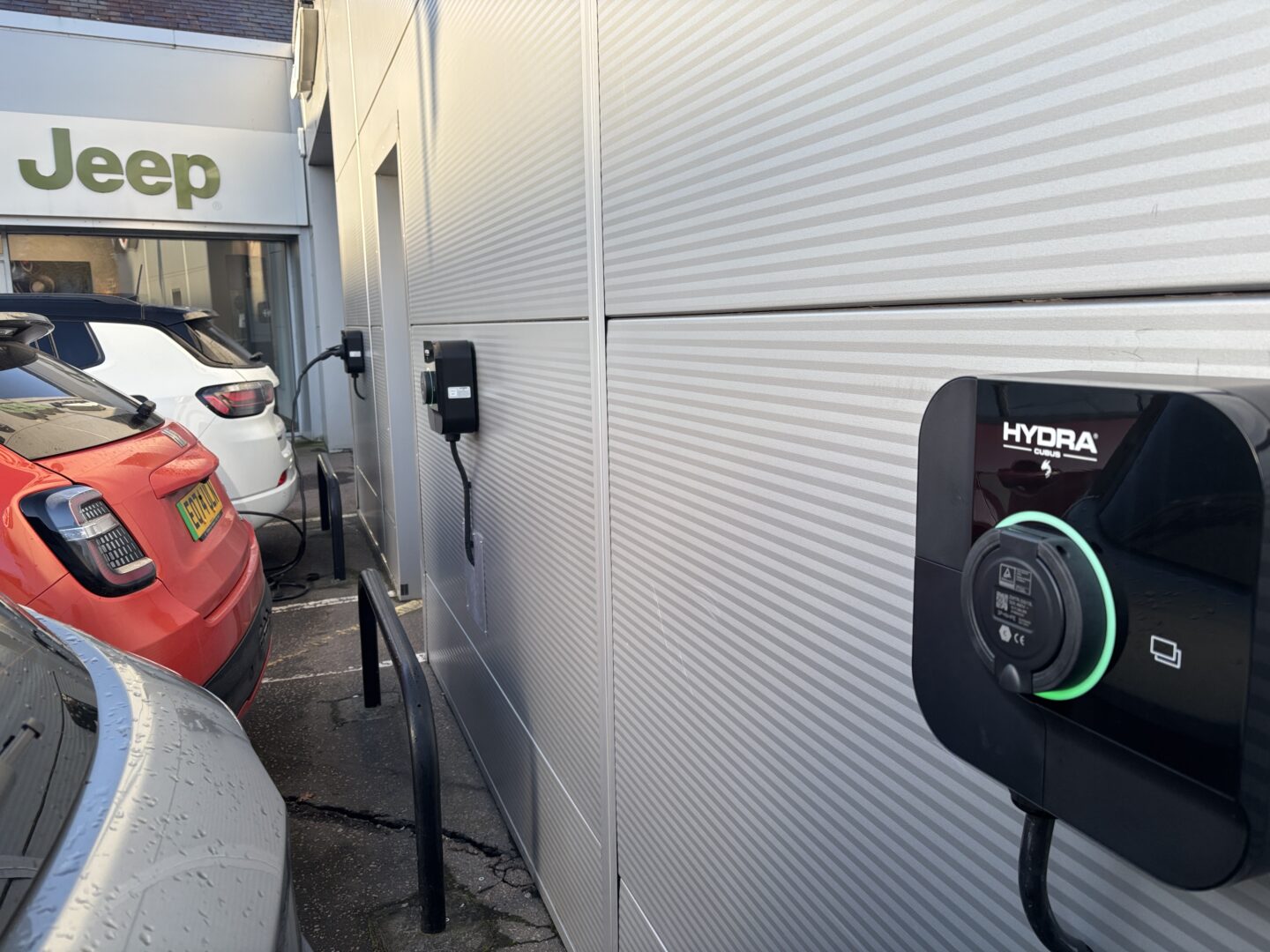
- Provide a compact, wall-mounted solution suitable for metal-clad building structures
- Improve operational flexibility for vehicle sales and servicing needs
- Ensure cost-effective installation and minimal disruption to daily business operations
Hydra’s Solution
Following a comprehensive consultation and site survey, Hydra developed a tailored solution:
- Identified that all EVs sold and serviced by the dealership had battery capacities between 7kW–11kW, meaning the chargers could be downrated to output up to 11kW, allowing for an additional charging socket to operate with the existing available power supply.
- Confirmed through site survey that DC chargers were not viable due to power supply constraints
- Designed the most cost-effective approach:
- Deploy 3-phase 22kW domestic units, down-rated to 11kW output
- Operate via RFID key fobs
- Integrate with Hydra’s NEXUS Operating Platform for smart management and control
- Selected Hydra’s Cubus Domestic 22kW 3-phase model, offering a lightweight, compact and fast-charging solution ideal for the space constraints
This ensured optimal charging performance without exceeding available power capacity.
Installation Delivery
Hydra’s Approved Installer Partner, Telice Electrical, delivered a seamless “Rip & Replace” service:
- Removed the outdated dual commercial charger
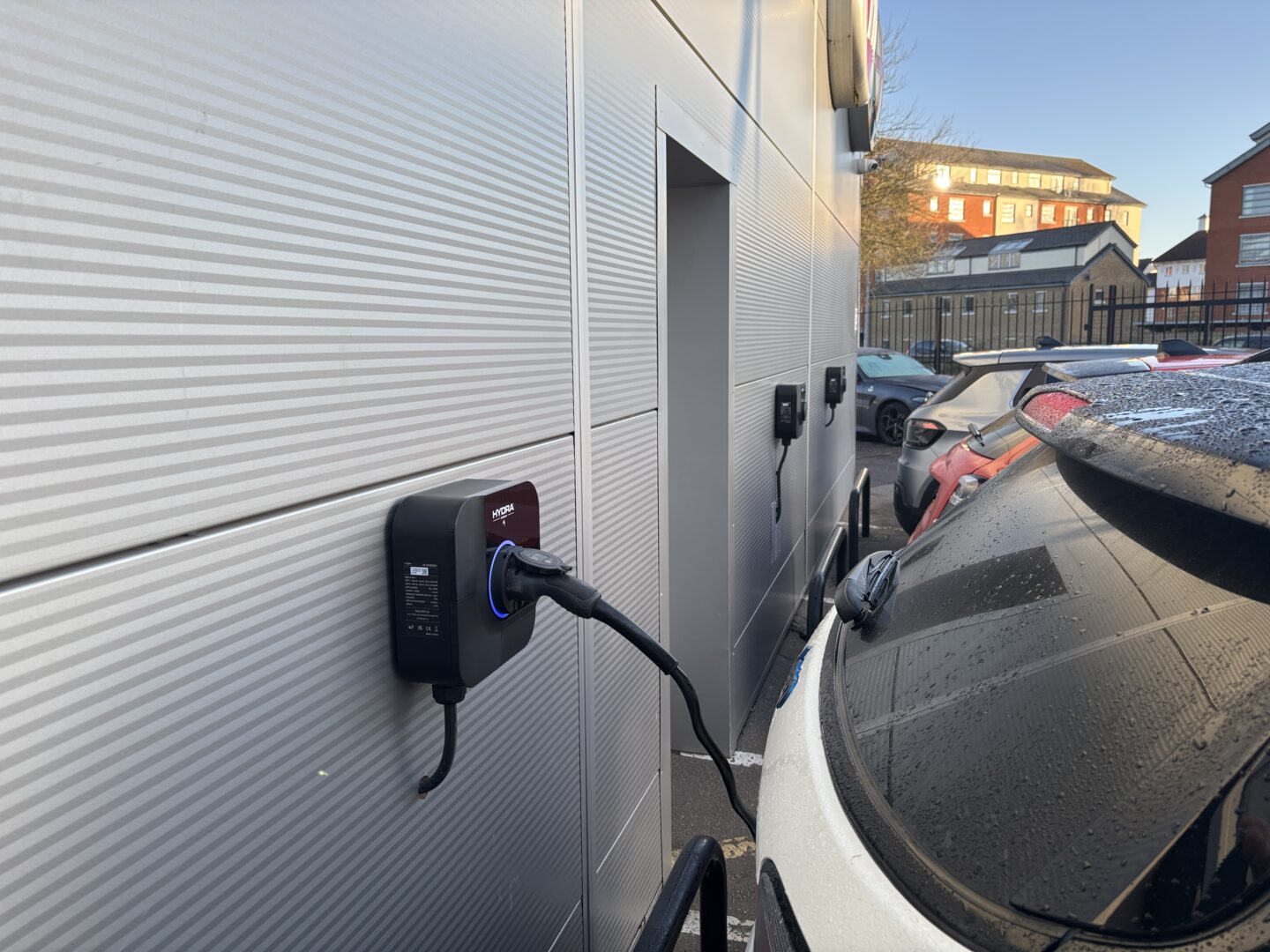
- Installed 3 x single-socket chargers
- Worked during quieter business periods to minimise operational disruption
- Reused as much existing electrical infrastructure as possible to maintain budget control
- Routed power cabling internally within the workshop to avoid excessive external cable runs — ensuring a neat, professional finish
The Outcome
The result was a significantly enhanced EV charging facility:
- 50% more charging sockets than the previous setup
- +100% combined charging output capacity compared to the original arrangement
- Improved operational flexibility for vehicle preparation and servicing
- Lower long-term operating costs
“Couldn’t ask for better service from start to finish, they listened to our concerns and acted. This has now transformed our business and all at an affordable price. Thank you” Darren Lynn, Aftersales Manager, D Salmon Cars